Quick answer: A blade-free pry bar under 7 inches (178 mm) is generally allowed in carry-on luggage, and the SHOWHOLI titanium pry bar is just 60 mm (2.4 in) long — well inside that limit. It still goes through standard X-ray screening, and the final decision always belongs to the TSA officer at the checkpoint.
If you carry a small pry bar on your keys, the question comes up every time you book a flight: leave it at home, pack it in a suitcase, or keep it in your pocket? The short version is that size and blade design matter more than what the tool is called.
What TSA’s 7-inch rule actually says
The U.S. Transportation Security Administration allows tools measuring 7 inches (178 mm) or less in carry-on baggage when measured end to end. Tools longer than that have to travel in checked baggage. The rule comes with two important limits:
- No blades. Knives, box cutters and any multi-tool that contains a blade are not allowed in carry-on, regardless of size.
- Officer discretion. Even when a tool fits the size rule, a TSA officer can still flag it. The checkpoint is the final authority.
TSA’s guidance treats non-bladed tools differently from knives for exactly this reason: a compact tool with no cutting edge can pass X-ray screening, while a small knife cannot. You can read the current wording on TSA’s official What Can I Bring page.
Why the SHOWHOLI pry bar fits inside the rule
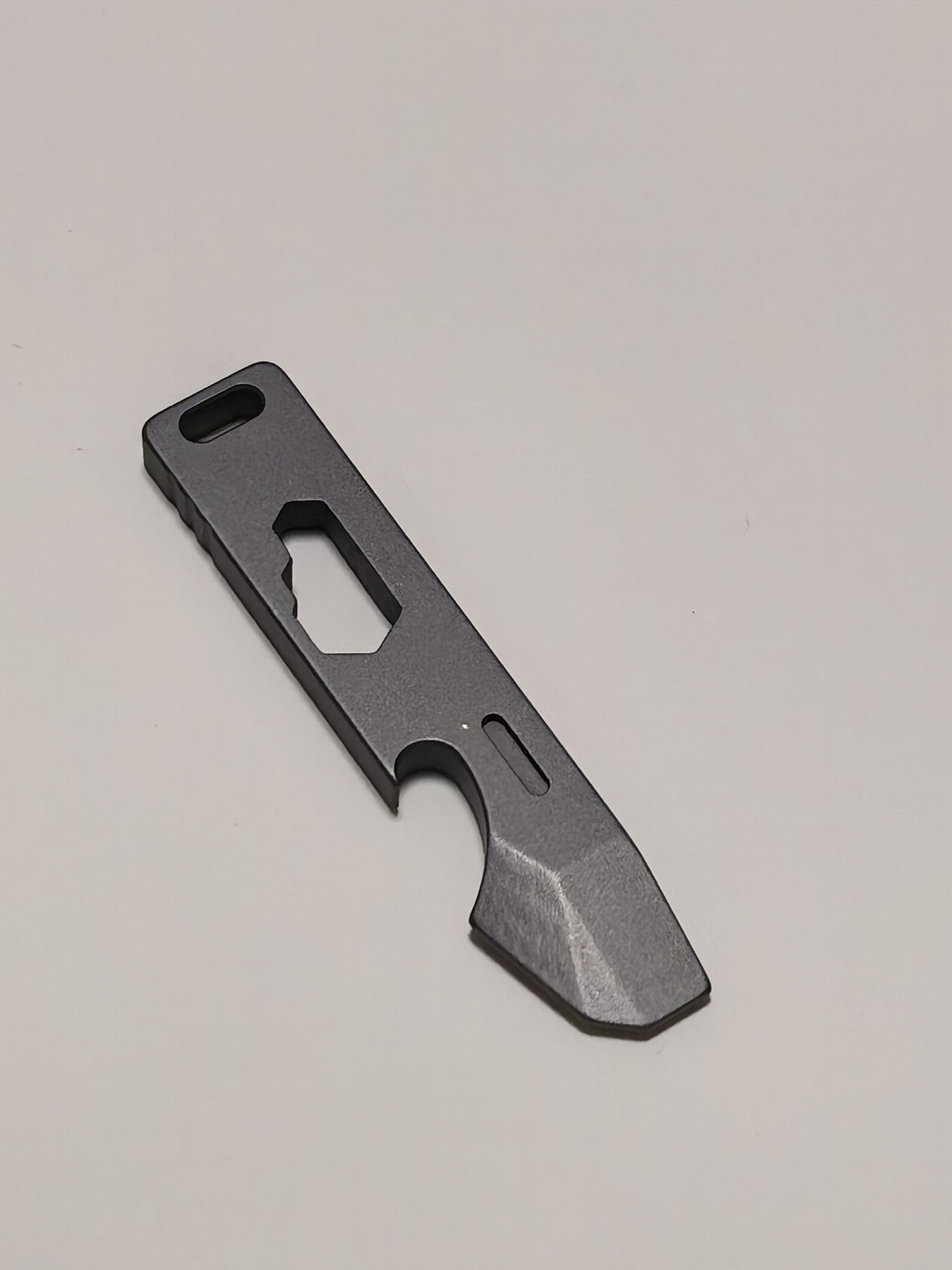
The SHOWHOLI 8-gram titanium keychain pry bar is 60 mm long — about 2.4 inches. That is less than one-third of the 7-inch limit, and there is no blade anywhere in the design. Instead, it combines:
- a flat pry tip,
- a bottle opener,
- ruler markings,
- and a lanyard hole for a standard key ring.
It is machined from a single piece of Grade 5 titanium and weighs 8 g, so it disappears on a keychain until you need it. Because it is a solid piece of metal, it will still show up clearly on the X-ray — plan to put it in the tray rather than leaving it in a pocket.
Carry-on or checked bag? A quick comparison
| Item | Carry-on | Checked bag | Notes |
|---|---|---|---|
| Blade-free pry bar under 7 in | Generally allowed | Allowed | Officer discretion applies |
| Pry bar or crowbar over 7 in | Not allowed | Allowed | Must be checked |
| Titanium EDC pen | Allowed | Allowed | Place it in the tray with metal items |
| Multi-tool with a blade | Not allowed | Allowed | Any blade means checked baggage |
| Box cutter or utility knife | Not allowed | Allowed | Blades are prohibited in carry-on |
Tips for getting through security without drama
- Put it in the tray. A small metal tool buried in a pocket looks like a finding; one sitting in the tray with your keys and coins looks like exactly what it is.
- Keep it attached to your keys. A key ring makes the tool’s purpose obvious and keeps it from sliding out of a tray.
- Be ready to explain it. “Small pry bar, no blade, under 7 inches” is a complete answer.
- Do not argue if it is flagged. If an officer asks you to check it, step aside and repack it in checked luggage. Arguing at the checkpoint only slows you down.
- Check the rules for your destination. TSA rules cover U.S. security. The UK, EU and other countries set their own limits, and some are stricter about tools.
When to check it instead
If you are flying through an unfamiliar airport, traveling internationally, or simply do not want to risk a delay, put the pry bar in your checked bag. The tool is small enough to disappear into a side pocket and tough enough to survive the trip. The same advice applies if your carry includes anything with a blade — that item sets the rule for the whole pouch.
Frequently asked questions
Can you bring a pry bar on a plane?
A blade-free pry bar 7 inches (178 mm) or shorter is generally allowed in carry-on. Longer pry bars and crowbars must be checked, and TSA officers make the final decision at the checkpoint.
Is a bottle opener allowed in carry-on?
Yes, in most cases. A standalone bottle opener, or a blade-free multi-tool with a bottle opener, is not on TSA’s prohibited list. It still passes through X-ray screening with your other metal items.
Can I fly with the SHOWHOLI titanium pry bar?
At 60 mm long with no blade, it sits well inside the 7-inch limit. It is designed for light prying, not as a weapon, but screening officers have discretion — if you want zero risk, pack it in checked luggage.
See the SHOWHOLI Titanium EDC Pry Bar Multi-Tool — 8 g, blade-free, and ready for your keys.